
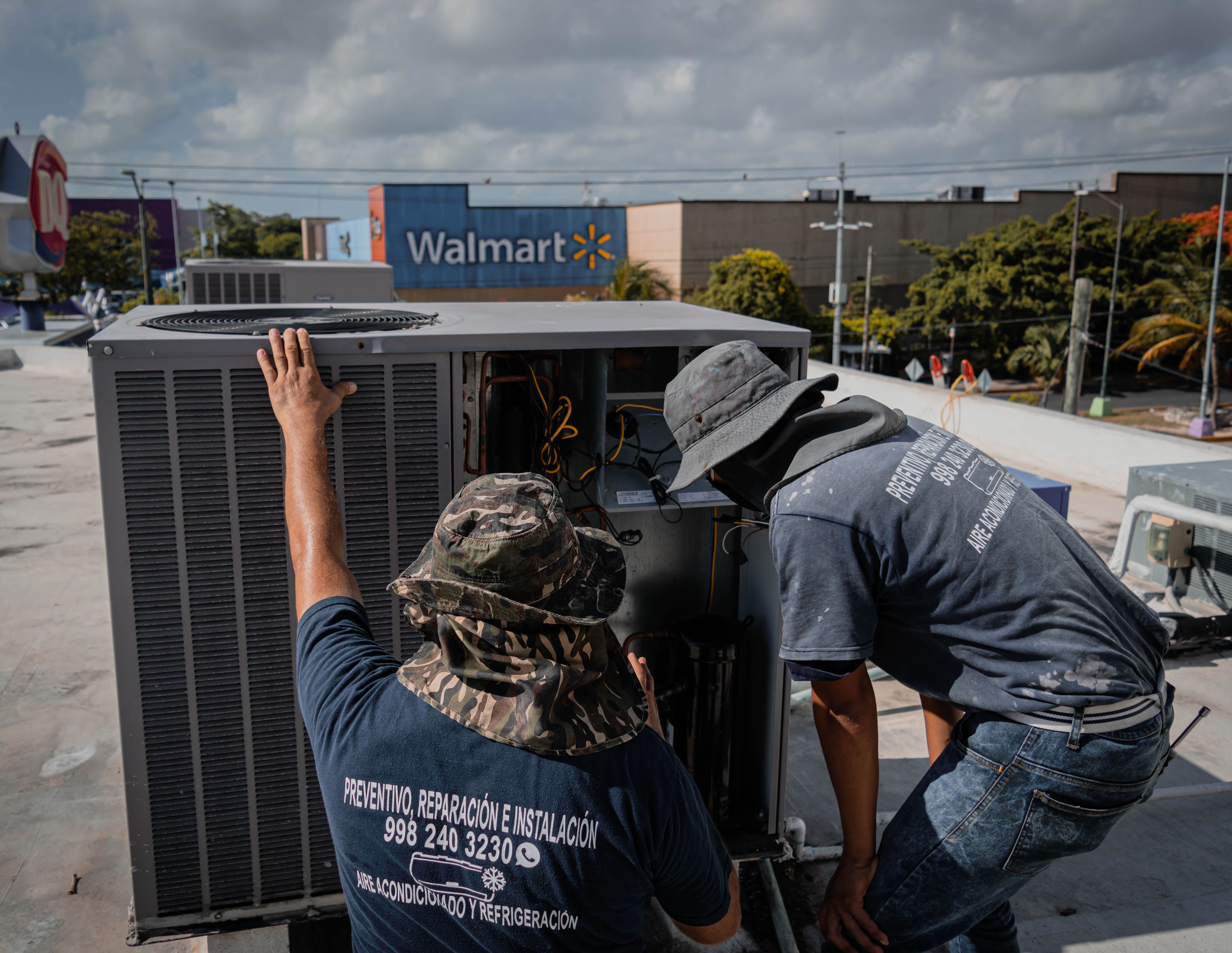
Keith Flores was only 12 years old when his brother-in-law asked if he wanted to make some money on a side job. The work was not glamorous. Keith rode his bike over, went with him to a house, and crawled underneath it to help remove old ductwork. He had almost no idea what he was doing, so his brother-in-law showed him what needed to come apart and later taught him how to put everything back together.
When the job was finished, Keith was told to come back the next day to get paid. He returned on his bike, watched his brother-in-law open a freezer where he kept cash, and was handed about $200. For a 12-year-old, that amount of money felt enormous. Keith immediately wanted to know when they could do it again.
That first day introduced him to a trade that would shape the next several decades of his life. He learned that skilled work could solve an uncomfortable problem for someone and create real value at the same time. What started as crawling underneath houses eventually turned into installations, service calls, sales, ownership, acquisitions, consulting, private equity, and technology.
Keith would go on to build and exit multiple HVAC companies, help scale home-service businesses, and later launch new ventures around the way contractors interact with homeowners. But his path was not a smooth rise from technician to entrepreneur. Much of what he now teaches came from mistakes, failed partnerships, poor financial decisions, and moments when rapid growth made the business look healthier than it actually was.
HVAC Was Part of His Life From the Beginning
Keith grew up around the trade. His father and uncle had an HVAC business, while his brother-in-law handled much of the work in the field. Because Keith was still a child, his introduction came through side jobs rather than a traditional apprenticeship.
Those early years exposed him to much more than air-conditioning equipment. His brother-in-law showed him ductwork, sheet metal, gutters, flashing, downspouts, and the kind of hands-on problem solving that was common in the trade at the time. Keith has described those years as difficult but valuable because he learned by physically doing the work rather than watching from the sidelines.
By the time he was old enough to think seriously about a career, HVAC already felt familiar. He understood the physical demands, he had seen how customers valued the work, and he knew there was real earning potential for someone willing to become good at it.
A Bigger Opportunity Showed Him What the Trades Could Pay
Eventually, Keith left the family operation and joined another contractor. He says a company owner named Lou offered him a roughly $20,000 signing bonus along with the possibility of earning more than $200,000 a year as an installer.
At the time, the offer sounded almost unbelievable to people around him. Keith says his family was skeptical because the installers they knew were not making anything close to that. He took the opportunity anyway and quickly realized that technical skill could be far more valuable than he had previously understood.
Keith used the signing money toward buying a house while he was still young. As his income grew, so did his understanding of how much value a strong technician could create for a home-service company.
His career also started changing because he was willing to take on work outside his original role. One day there was not enough installation work available, but Keith did not want to simply go home. The company sent him on a service call instead. He ended up selling a replacement system, then installing it himself.
That experience opened another door. Keith realized he was capable of doing more than completing work after somebody else had already made the sale. He could diagnose a problem, communicate with a homeowner, create trust, close the opportunity, and then deliver the job. Over time, the company wanted him spending more of his time in sales because he was proving valuable there.
He Wanted to Understand the Business Behind the Work
As Keith moved through the organization, he was given more responsibility and better titles. What frustrated him was that he still did not feel like he understood how the company itself worked.
He wanted to understand where leads came from, how pricing was calculated, why some jobs were profitable and others were not, how technicians were managed, how marketing decisions were made, and how an owner actually turned revenue into profit. The titles were not enough for him because he wanted the knowledge behind them.
Eventually he decided the only way to fully understand the business was to build one himself.
Keith moved aggressively. He says he bought or prepared several trucks, leased a building, hired technicians, wrapped vehicles, purchased computers, and began setting up marketing before the entire licensing process was fully resolved. He was building the organization at full speed before every administrative piece was completely ready.
That tendency to move quickly became both one of his greatest strengths and one of the sources of his biggest mistakes.
His First Company Grew to $4.5 Million Almost Immediately
Keith's first major company, National Heating and Cooling, grew rapidly. His own biography says the business went from zero to approximately $4.5 million in revenue in less than a year.
From the outside, that kind of growth looks like proof that the strategy worked perfectly. The company had trucks in the field, employees working, advertising producing calls, and millions of dollars flowing through the operation. That momentum eventually helped create an acquisition opportunity and pushed Keith deeper into the larger home-service industry.
But Keith now describes that period much more critically.
He has said that he understood sales and branding far better than he understood financial statements. He could generate revenue, but he did not yet understand the P&L with the discipline required to run a high-growth operation. He was focused heavily on topline growth and spent aggressively while the company expanded.
That difference between revenue and profitability became one of the most important lessons of his career.
A contractor can be extremely good at generating work while still building a financially weak company. Revenue can make everything look healthy because the phone rings, technicians stay busy, trucks get added, and the organization appears to be expanding. Underneath that activity, however, pricing mistakes, payroll, warranty work, advertising, financing, inventory, and overhead can quietly consume the money the company is producing.
Keith had learned how to make the number at the top of the income statement grow. Understanding what remained at the bottom took much longer.
Rapid Growth Can Hide Expensive Problems
The bigger a company becomes, the more places there are for money to disappear. A small pricing mistake may not seem serious on one job, but multiplied across hundreds of jobs it becomes significant. A technician who is inefficient, a marketing channel that produces weak leads, an office process that creates rework, or a poorly structured compensation plan can quietly reduce profitability while revenue continues rising.
Keith has spoken openly about how aggressive growth can make an owner feel successful before the underlying business is actually strong. The trucks look impressive. The revenue sounds impressive. The company may even become known across the market.
None of that guarantees the owner is building real value.
That realization would follow Keith into the next stages of his career.
He Kept Building Companies and Learning From Each One
National Heating and Cooling was only one chapter.
Keith later became involved in building, scaling, advising, and exiting other home-service companies. His biography says he helped take another service business from roughly $600,000 to more than $10 million in annual revenue in about a year. Over time, he gained experience not only as a contractor but also through acquisitions, investment groups, private equity, operations, marketing, and sales.
That gave him a perspective most technicians never see.
A technician looks at whether the repair was completed correctly. A salesperson thinks about whether the homeowner said yes. An owner has to think about cash flow, payroll, overhead, customer acquisition, and management. A buyer looking at the company may care even more about profitability, recurring customers, management depth, and whether the business can operate without the founder.
Keith eventually experienced the industry from all of those angles.
The more companies he became involved with, the more he realized that a company can be impressive from one perspective and weak from another. Revenue may impress the market, but buyers care about earnings. A charismatic founder may close sales, but buyers care about whether the business depends too heavily on that person. A huge service territory may create visibility, but it may also create inefficiency.
Those lessons became especially painful in one partnership.
One Partnership Grew Large but Became Unsustainable
Keith has described helping build another company that reached roughly $15 million in revenue. The business was growing, but the relationship between the partners deteriorated badly.
The experience changed how he thought about ownership agreements.
When people first enter a partnership, they often focus on the upside. Everyone is excited. The company is small. The relationship feels strong. Difficult questions about control, responsibilities, compensation, exits, disagreements, and ownership percentages can feel unnecessary when everybody believes they are aligned.
Keith learned that those conversations become much harder after millions of dollars are involved.
He has said the partnership eventually became so difficult that he chose to leave even though there was substantial money on the table. Different interviews describe the transaction in slightly different ways, with one referring to a roughly $15 million buyout and another describing Keith's potential share as around $7.5 million.
The exact structure of that private deal has not been independently disclosed, but Keith's consistent point is that he believed leaving the relationship was worth more than staying for the payout.
That is a very different kind of business lesson from learning how to install equipment.
A company can be valuable on paper and still become miserable to own.
Starting Again Changed What He Wanted From a Business
After leaving that partnership, Keith built HG Home Services in Southern California. This time, he did not try to recreate the same kind of aggressive expansion he had pursued earlier in his career.
The model became far more concentrated.
Keith has described operating within a service radius of roughly five miles around areas such as Newport Beach and Corona del Mar. Rather than trying to dominate a huge map, the company focused on becoming highly effective in a small, affluent market.
The strategy was built around density.
A tightly concentrated service territory means technicians spend less time driving and more time completing work. Scheduling becomes easier. Customers can receive faster service. Fuel costs are lower. Managers have more flexibility when a job runs long or an emergency appears.
Keith's thinking had changed.
Earlier in his career, growth often meant more trucks, more territory, and more revenue. Later, he became more interested in how much value the business could create inside a smaller geographic area.
That shift reflects a broader maturity in the way he looks at home services.
Growth is not always about making the company bigger.
Sometimes it is about making the operation better.
He Stopped Letting the Weather Control the Business
HVAC companies often talk about the weather as if it controls the entire business.
A brutal summer can fill the schedule overnight. A mild season can leave technicians waiting for calls. Many companies celebrate extreme heat because it creates demand, then struggle during slower periods because the business has not built enough reasons for customers to call outside emergencies.
Keith argues that a strong HVAC company should be weather enhanced, not weather driven.
The distinction is important.
Weather can increase demand, but the company should not depend on extreme temperatures to survive. A healthier operation builds relationships with customers throughout the year through maintenance, referrals, follow-up, membership programs, branding, and repeat business.
Keith's later approach focuses heavily on keeping customers connected to the company rather than treating every service call like an isolated transaction.
If the business only becomes busy when something breaks, it is always waiting for circumstances outside its control.
Keith wanted more control over demand.
He Became More Focused on the Customer Experience
Keith has always placed a lot of importance on branding, but his definition goes far beyond logos and truck wraps.
He talks about the entire visible experience.
The truck should be clean. The technician should look professional. Communication should be clear. The customer should understand what is happening. The company should appear organized before the technician ever opens the equipment.
That matters because homeowners usually cannot judge the technical quality of HVAC work before they buy it.
They may not know whether the diagnosis is correct. They may not understand every component. They may not know whether one installation method is superior to another.
They judge the things they can understand.
How the company answers the phone.
How quickly someone arrives.
Whether the technician listens.
Whether the options are explained clearly.
Whether the home is respected.
Whether the invoice makes sense.
Whether somebody follows up afterward.
Those details become evidence of professionalism.
In Keith's view, the technical work and the customer experience are not separate products.
They are the same product.
He Started Looking Harder at the Customers He Already Had
Another major change in Keith's thinking came through marketing.
Home-service companies can spend heavily trying to create new customers through Google Ads, Local Services Ads, SEO, direct mail, social media, radio, and other channels. Once that customer finally buys, many contractors complete the job and barely communicate with them again.
Keith sees that as a major waste.
The company has already paid to acquire that homeowner. Trust has already been established. The technician has already been inside the home. The customer already knows the brand.
Replacing that relationship with another cold lead is expensive.
Keith became increasingly focused on retention, referrals, and finding ways to stay connected with customers long after the first service call.
That thinking eventually led him beyond traditional HVAC.
Decades of Service Calls Led to a New Technology Idea
After years of visiting homes, Keith became interested in a simple problem.
Contractors usually know what is happening inside a house only after the homeowner notices something is wrong.
The air conditioner stops cooling.
A water leak appears.
The electrical system creates a problem.
The homeowner notices the failure and calls someone.
The entire system is reactive.
Keith began asking whether that relationship could work differently.
That question became part of the idea behind Home Guardian, a technology platform designed to monitor major home systems and give homeowners and contractors access to information before problems become emergencies.
The concept is similar to the way modern vehicles monitor themselves.
A car continuously tracks fuel, tire pressure, engine temperature, maintenance intervals, and fault codes. The driver receives information before every problem becomes catastrophic.
Homes are far less transparent.
A property may contain hundreds of thousands or millions of dollars of assets, but many of its most important systems remain invisible until something fails.
Keith wants to change that.
Moving Into Software Created a Completely Different Kind of Risk
Technology development introduced Keith to problems that were very different from anything he had experienced in HVAC.
He has described spending around $500,000 with a software development company that failed to produce what he expected. In another situation, he says a project generated an unexpected change order worth hundreds of thousands of dollars after he believed much of the work had already been completed and paid for.
The experience was expensive, but Keith continued pushing the idea forward.
That persistence reflects a pattern throughout his career.
He moves quickly, sometimes before every risk is fully understood. When the consequences appear, he adjusts and continues.
The difference between his early career and his later career is that he now understands much more clearly what those mistakes can cost.
He No Longer Looks at Revenue the Same Way
Perhaps the biggest change in Keith's career is how he talks about money.
The younger version of him loved rapid growth.
More trucks meant progress.
More revenue meant success.
A bigger company looked like a better company.
The older version talks much more about profitability, cash flow, customer retention, operating efficiency, and enterprise value.
That change came from experience.
Keith has already lived through businesses where topline revenue looked impressive while the financial foundation underneath it was much weaker than he realized.
He has seen how quickly growth can consume cash.
He has seen what happens when partnerships are poorly structured.
He has seen how expensive expansion can become.
He has seen how little revenue means if the owner is constantly stressed, undercapitalized, or trapped inside a broken relationship.
For contractors chasing their first million dollars, revenue feels like proof.
After that, $5 million becomes the next milestone.
Then $10 million.
Then $20 million.
Keith's career shows why the number itself is not enough.
A smaller company with strong margins, loyal customers, good employees, and disciplined systems can be far more valuable than a larger company that constantly struggles with cash, turnover, and overhead.
His View of Hiring Changed Too
Keith has also spoken about developing younger technicians rather than relying entirely on experienced workers from competitors.
That perspective makes sense when you look at his own story.
He did not begin his career as an expert.
Someone gave him an opportunity.
His brother-in-law taught him how to work under houses, how systems came apart, and how they went back together. Over time, Keith learned installation, service work, sales, and eventually the broader business behind the trade.
The industry's labor shortage becomes difficult to solve when every contractor wants an experienced technician but very few want to train the next one.
Somebody has to create the future workforce.
Keith believes contractors need to become better at developing people, not simply recruiting finished technicians.
Private Equity Changed the Competitive Environment
Keith has also spent enough time around acquisitions and private equity to understand how much the home-service industry has changed.
Large investment-backed groups can spend heavily on recruiting, marketing, acquisitions, compensation, and technology. Independent contractors may find themselves competing against organizations with far more capital than they could comfortably deploy.
Keith does not believe the answer is always to outspend them.
A local company can still build advantages that money alone cannot create overnight.
It can become extremely strong in a concentrated market.
It can build deep customer relationships.
It can create a recognizable local brand.
It can retain good technicians.
It can move quickly.
It can create a level of service that customers talk about.
That is another reason Keith's later business looks so different from the companies he built earlier.
He became less interested in being everywhere and more interested in being difficult to beat where he already operated.
The Most Important Change Was How He Thought About the Business
Keith Flores's career can easily be reduced to impressive numbers.
He started young.
He built companies.
He sold companies.
He grew businesses into the millions.
He walked away from major deals.
He moved into private equity and technology.
But the numbers are not what make the story useful.
The value is in how his thinking changed.
Early in his career, Keith understood the physical work.
Later, he understood sales.
Then he learned how quickly a company could grow.
After that, he discovered how dangerous growth could become when the financial side of the business was weak.
Partnership problems taught him the importance of ownership agreements.
Large service territories taught him about operational inefficiency.
Customer-acquisition costs taught him the importance of retention.
Decades of reactive service calls pushed him toward technology designed to identify problems earlier.
Each chapter changed the next one.
The $200 Day Was the Beginning of the Same Lesson
When Keith crawled underneath that first house at 12 years old, the economics were simple.
There was an uncomfortable problem.
Someone needed it solved.
Keith was willing to do the work.
When the job was finished, he received $200.
Everything that came later became more complicated, but the basic principle never disappeared.
A technician creates value by solving the problem directly.
A salesperson creates value by helping the homeowner understand the solution.
An owner creates value by building a company capable of solving those problems through other people.
A strong operator creates even more value by building systems that allow the company to deliver that experience repeatedly without depending on the founder.
Keith spent decades moving through those stages.
The physical work taught him the trade.
Sales taught him communication.
Ownership taught him the cost of growth.
Failed partnerships taught him structure.
Acquisitions taught him how buyers think.
Technology is now teaching him how the relationship between homeowners and contractors might change again.
His Biggest Mistakes Became His Best Education
Keith's story would be less useful if everything had worked perfectly.
It did not.
He grew businesses before fully understanding the P&L.
He spent aggressively.
He entered partnerships that eventually broke down.
He says he walked away from millions rather than continue one of those relationships.
He lost substantial money trying to develop software.
He has also acknowledged that he was more arrogant when he was younger and that his approach to business has changed significantly with experience.
Those mistakes are exactly why his later perspective carries more weight.
Profit became important because he had already experienced growth without enough financial discipline.
Contracts became important because he had already lived through partnership conflict.
Customer retention became important because he had watched companies spend enormous amounts replacing customers they already had.
Technology became important because he had spent decades seeing homeowners react only after something failed.
The mistakes became part of the operating system.
The Goal Is Different Now
Keith still operates in home services, but his attention is increasingly focused on building something larger than another traditional HVAC company.
Home Guardian represents an attempt to change the relationship between homeowners and contractors by giving both sides more information about what is happening inside the home.
Whether that business ultimately succeeds at the scale Keith hopes for is still an open question.
What is clear is that his definition of success has changed.
The first businesses were about proving how fast he could grow.
Later businesses became more focused on profitability, density, customer relationships, and control.
Now he talks much more about building something that could outlast him.
That is a long way from the kid riding his bicycle back to collect $200 in cash.
The Real Lesson for Contractors
The obvious lesson from Keith Flores's story is that the trades can create wealth.
That part is true, but it is incomplete.
The more valuable lesson is that earning money and building a strong business are different skills.
A great technician still has to learn pricing.
A strong salesperson still has to understand margins.
A fast-growing owner still has to understand cash flow.
A successful partnership still needs clear agreements.
A busy company still needs good systems.
A large service territory still needs to be efficient.
A customer who already trusts the company may be more valuable than the next cold lead.
Keith learned many of those lessons only after getting them wrong first.
That is what makes his story useful.
He began by learning how to work inside houses.
Over time, he had to learn how to build the organization around that work.
Today, after decades of companies, exits, partnerships, acquisitions, and new ventures, he is no longer simply trying to build the biggest HVAC company he can.
He is trying to build stronger systems, better customer relationships, and businesses that create value without depending entirely on constant expansion.
The biggest transformation was not from $200 days to multimillion-dollar companies.
It was from thinking like someone trying to grow fast to thinking like someone trying to build something that lasts.
Skip the $2,000–$4,000/Month Marketing Agency. Learn to Run Google Ads Yourself With AI for Just $97!
The Google Ads & AI Masterclass for Home Improvement Contractors shows you how to research your market, build your campaign, create a high converting landing page, track leads, and use AI to improve performance.